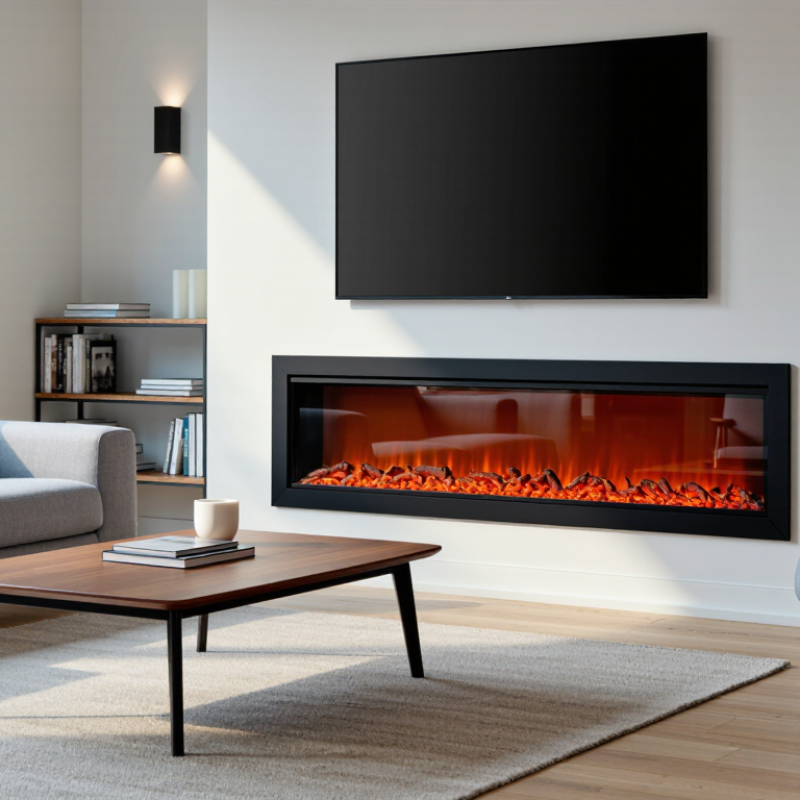
| Vent-Free Installation | Electric models do not burn fuel and normally do not require a chimney, flue, or exhaust vent. | Installation can be simpler and more flexible than a wood-burning or gas fireplace. | Follow the product manual, electrical requirements, and local building or fire-safety rules. |
| Heating Capacity | A common high setting is 1,500 watts, which produces approximately 5,100 BTU per hour. Lower settings may use about 750 watts. | This provides supplemental heat for a room rather than replacing a whole-home heating system. | Choose the output according to room size, insulation, ceiling height, and the local climate. |
| Power Requirement | Many residential units use a standard 120-volt outlet; a 1,500-watt unit draws about 12.5 amps at 120 volts. | Electrical planning affects placement, safety, and whether a dedicated circuit is advisable. | Avoid extension cords unless the manufacturer specifically permits them, and check the circuit rating. |
| Flame-Only Mode | Many electric fireplaces can display the flame effect without activating the heater. | It allows year-round ambiance without adding heat to the room. | Look for independently controlled flame brightness, ember lighting, and heat functions. |
| Temperature Control | Thermostatic controls are available on many models and can cycle the heater to maintain a set temperature. | Automatic control can improve comfort and prevent unnecessary heating. | Compare thermostat accuracy, temperature range, remote-control access, and manual override options. |
| Safety Features | Common features include overheat protection, automatic shutoff, cool-touch controls, and a tip-over switch on some freestanding designs. | These features reduce—but do not eliminate—electrical and heat-related risks. | Keep fabrics and furniture away from the heater outlet and maintain every clearance specified in the manual. |
| Design Format | Common formats include wall-mounted, recessed or built-in, insert, media-console, and freestanding units. | The format determines installation effort, visual impact, storage needs, and portability. | Measure the opening, wall depth, floor area, viewing height, and access to an electrical outlet. |
| Flame Appearance | LED-based flame effects are commonly used and may include adjustable brightness, color settings, logs, crystals, or ember beds. | The visual effect is the main ambiance benefit because there is no real combustion flame. | View the flame from your normal seating position and check whether the display looks natural in both bright and dim rooms. |
| Sound and Controls | Some units offer crackling audio, remote controls, touch panels, timers, or app-based controls; availability varies by model. | Control options affect daily convenience and the realism of the experience. | Choose a model with independently adjustable sound and a timer if quiet operation or scheduled use is important. |
| Energy Use | At the point of use, electric resistance heating converts nearly all incoming electrical energy into heat; operating cost depends on wattage, usage time, and electricity price. | It makes energy consumption relatively easy to estimate. | Use the formula: operating cost = kilowatts × hours used × local electricity rate. |
| Indoor Air Quality | Because an electric fireplace has no combustion process, it does not produce combustion gases such as carbon monoxide during normal operation. | No combustion emissions are released into the room from the appliance itself. | It still requires proper electrical installation and should not be covered or operated with damaged cords or plugs. |
| Maintenance | Routine care generally involves dusting, cleaning the glass or viewing surface, and keeping air inlets and outlets unobstructed. | There is no ash removal, chimney sweeping, or fuel-line maintenance. | Disconnect power before cleaning and follow the manufacturer’s recommended maintenance procedure. |
| Best Use Case | Electric fireplaces are well suited to apartments, bedrooms, living rooms, offices, and spaces where a traditional vent system is impractical. | They combine decorative ambiance with convenient supplemental heating. | Select the size and format based on the room layout, intended heating role, installation restrictions, and preferred visual style. |