
How to Choose a Wall Mounted Toilet Bowl for Global Buyers

Choosing a Toilet Bowl Wall Mounted system requires more than comparing shapes, prices, and polished finishes. Global buyers must examine installation conditions, local plumbing standards, water pressure, maintenance access, and long-term spare-part availability. A beautiful bowl can still become a costly mistake if its carrier frame does not match the wall structure.

Bathroom designer and author Barbara Sallick offers a useful principle: “A bathroom should be both beautiful and hardworking.” That idea matters here. A wall-mounted toilet should look light and modern, while supporting daily use reliably. Buyers should check the bowl’s load rating, rim design, flushing performance, seat quality, and compatibility with concealed cisterns. Measure carefully. A few misplaced millimetres can affect comfort and service access.

This guide introduces practical criteria for selecting a Toilet Bowl Wall Mounted solution across different markets. It considers ceramic quality, mounting height, cleaning needs, installation depth, and after-sales support. It also addresses differences between residential projects, hotels, offices, and accessible bathrooms. Certifications deserve attention, but certification names vary by country. Verify them locally.

Do not trust photographs alone. Ask for technical drawings, installation manuals, test information, and warranty terms. Request replacement-part timelines before placing a large order. That step is often overlooked.

There is no perfect model. A premium finish may show water marks. A compact design may reduce knee space. Even experienced buyers can miss regional compatibility. Careful comparison reduces those risks and helps purchasers choose a wall-mounted toilet that performs well beyond the showroom.
How to Choose a Wall Mounted Toilet Bowl for Global Buyers

What Is a Wall Mounted Toilet Bowl?

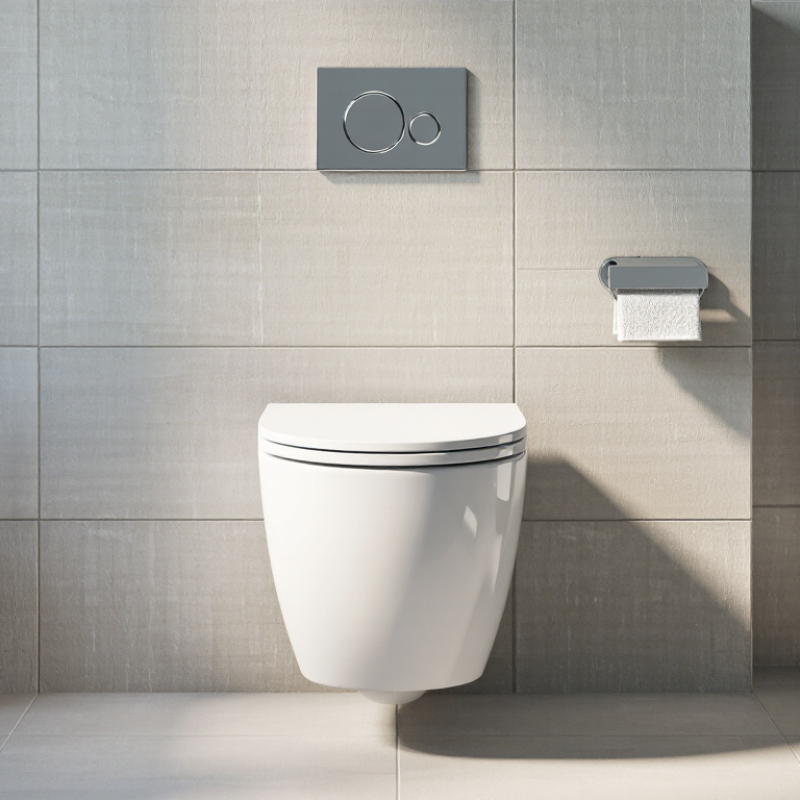
A wall mounted toilet bowl is a toilet pan fixed to a strong frame inside the wall. Unlike a floor mounted toilet, it does not rest directly on the bathroom floor. The hidden frame supports the bowl and connects it to the drainage system. A concealed cistern usually sits behind the wall, while a flush plate remains visible.

This design creates open floor space beneath the bowl. Cleaning becomes easier, especially around the rear corners and floor joints. The installation can also make a small bathroom appear less crowded. However, the wall must contain a suitable carrier frame, reliable water connections, and correctly positioned waste pipes. A decorative wall alone cannot support the load.

For global buyers, the bowl, frame, cistern, and flush plate should be checked as one system. Drainage outlets and water inlet positions vary between regions. Local plumbing rules also differ, so a qualified installer should verify measurements before construction. The finished seat height deserves attention too. Older users may prefer a slightly higher position, while children may need a lower one.

Maintenance is often misunderstood. Access through the flush plate allows basic servicing, but major repairs may require opening the wall. That promise is not automatic. Poor installation, weak framing, or incompatible parts can remove the design’s practical advantages. Ask for load testing data, installation drawings, ceramic specifications, and replacement-part availability before choosing.

How to Choose a Wall Mounted Toilet Bowl for Global Buyers - What Is a Wall Mounted Toilet Bowl?
Selection Dimension Typical Data or Options Why It Matters Global Buyer Checklist
Product definition A wall mounted toilet bowl is suspended from a concealed wall carrier rather than fixed directly to the finished floor. The floor remains open, making cleaning easier and creating a lighter visual appearance. Confirm whether the quotation includes only the ceramic bowl or also the carrier frame, cistern, flush plate, seat, and installation hardware.
Overall projection Approximately 490–560 mm from the finished wall to the front of the bowl; compact models may be shorter. Projection affects bathroom circulation, door clearance, and compliance with accessibility requirements. Check the complete installed projection, including the seat and flush plate, not only the ceramic dimensions.
Bowl width Commonly about 350–380 mm, although comfort and compact designs vary. Width influences user comfort, side clearance, and compatibility with the carrier frame. Compare the bowl width with the available wall space and the required side-clearance rules in the destination market.
Seat height A standard installed seat height is often around 400–450 mm from the finished floor; accessible installations may be higher. Height affects comfort, ease of transfer, and accessibility. Measure from the finished floor to the top of the seat, and confirm that the carrier allows the required adjustment range.
Wall fixing centres Common carrier fixing centres include approximately 180 mm and 230 mm, depending on the system. The fixing pattern must match the bowl and the concealed carrier. Request a technical drawing showing bolt spacing, bolt diameter, mounting height, and allowable adjustment.
Waste outlet connection Common nominal outlet sizes include approximately 90–110 mm, with adapters used in some installations. The outlet must align with the building drainage pipe and the carrier connection. Verify the actual pipe diameter, connector type, insertion depth, and local plumbing requirements before ordering.
Flush volume Dual-flush configurations commonly use approximately 3 L for reduced flush and 6 L for full flush; other regional settings are available. Flush volume affects water consumption, performance, and regulatory compliance. Check the certified flush settings, required operating pressure, and destination-country water-efficiency rules.
Water pressure requirement Concealed cistern systems commonly require a suitable mains supply and may specify a minimum inlet pressure; the exact value is system-specific. Insufficient pressure can cause slow filling or unreliable flushing. Obtain the manufacturer’s minimum and maximum pressure data and compare it with the project’s water supply.
Structural load support The carrier frame, wall structure, fixings, and bowl work together to support the user; some tested carrier systems are rated around 400 kg, but ratings vary. A wall mounted bowl transfers load into the carrier and building structure rather than the floor. Request a load-test report or conformity documentation and confirm the wall type, anchoring method, and installation conditions.
Ceramic material Vitreous china or sanitary ceramic is commonly used, with a glazed surface for hygiene and easier cleaning. Material quality, glaze uniformity, and firing consistency affect durability and appearance. Inspect glaze coverage, dimensional tolerances, water absorption data, edge quality, and packaging protection.
Rim design Available designs include conventional rimmed bowls and rimless or open-rim flushing designs. Rimless designs can improve access for cleaning, while flushing performance depends on hydraulic design. Review independent flushing-test results, splash control, bowl wash coverage, and cleaning access.
Seat compatibility Seat options may include standard, soft-close, quick-release, or accessible designs. Seat hinge spacing, shape, and load capacity must correspond with the bowl. Confirm seat dimensions, hinge centres, replacement availability, and whether the seat is included.
Concealed cistern access Most systems provide service access through the flush plate opening. Accessible internal components simplify maintenance without removing the finished wall. Check access-panel size, replacement-part availability, valve compatibility, and service instructions.
Installation wall type Installation may use a framed carrier in a stud wall, a floor-supported carrier, or a masonry-compatible system. The wall construction determines anchoring, finished depth, and structural stability. Confirm compatibility with concrete, masonry, metal studs, or timber framing before selecting the carrier.
Regulatory documentation Documentation may include dimensional drawings, installation instructions, plumbing approvals, load testing, and water-efficiency test reports. Requirements differ between countries and construction projects. Request current certificates and verify that they are accepted by the destination market, project consultant, or local authority.

Which Wall Mounted Toilet Features Matter Most?

For global buyers, the most important wall mounted toilet features are often hidden behind the wall. The concealed frame must support the bowl, cistern, user load, and future servicing. Look for tested systems that follow recognized standards, such as EN 997 or ASME A112.19.2/CSA B45.1. Local approval still matters.

Flush performance deserves careful attention. The U.S. EPA WaterSense program limits labeled toilets to 1.28 gallons per flush, compared with the older 1.6-gallon standard. Its criteria also require effective waste removal in independent MaP testing. That figure is useful, but it is not the whole story. Poor drainage design can weaken performance. A strong flush cannot repair an unsuitable pipe layout.

Height adjustment improves comfort for children, older users, and people with limited mobility. An accessible service opening also reduces repair costs. Choose replaceable valves, widely available seals, and a flush plate that local technicians understand. A beautiful button is not enough. Noise control matters in bedrooms and compact apartments, while smooth internal surfaces can simplify cleaning.

Tips: Ask for the frame’s tested load rating, flush-test result, spare-part availability, and warranty terms. Confirm water pressure requirements before ordering. Check whether the cistern can be serviced without removing tiles. I would also inspect the installation manual carefully; vague diagrams often signal future trouble. The design may look perfect, yet maintenance access is where many projects fail.

How to Match the Toilet Bowl with Bathroom Space

A wall mounted toilet should be matched to the room, not chosen only for its appearance. The 2024 Houzz U.S. Bathroom Trends Study reports that roughly one-third of renovating homeowners expanded their bathroom footprint. That figure shows a practical problem: many bathrooms still have limited floor area. Measure the finished wall, door swing, vanity edge, and shower entrance before selecting a bowl. Most wall mounted models project about 500 to 550 millimeters, but the carrier frame adds hidden depth behind the wall. Leave comfortable knee space in front. A narrow room may feel larger, but only if the door does not strike the bowl.

Check the bowl height against the users. A seat height near 430 millimeters suits many adults, while a higher setting can help older users transfer safely. The NKBA 2024 Bathroom Design Trends report continues to identify accessibility as a major planning concern, yet accessibility is not achieved by height alone. Side clearance, grab-bar reinforcement, and clear approach space also matter. I once focused too heavily on the bowl projection and overlooked the flush plate position. That mistake created an awkward reach. Small details matter.

Match the flush system to local water pressure and maintenance access. The U.S. EPA WaterSense specification limits labeled toilets to 1.28 gallons per flush or less, while maintaining performance requirements. However, lower water use does not guarantee quiet or reliable flushing in every building. Confirm the carrier rating, service opening, waste outlet position, and local plumbing rules. A beautiful compact layout can still fail when the concealed tank cannot be reached.

How to Check Plumbing, Installation, and Compatibility

A wall mounted toilet looks simple, but its hidden frame carries the real risk. Check the existing drain position, pipe diameter, wall depth, and water pressure before selecting the bowl. A 100 mm waste pipe may suit many projects, but regional codes and building layouts can differ. Measure twice.

The U.S. Environmental Protection Agency’s WaterSense specification limits certified toilets to 1.28 gallons per flush, compared with older models using about 3.5 gallons. Lower water use is valuable, but weak pressure or poor drainage can still cause incomplete flushing. Test the supply pressure and inspect the drain slope. A concealed cistern also needs an accessible service opening. Do not bury every component behind tiles.

The WHO/UNICEF Joint Monitoring Programme reported that 3.5 billion people lacked safely managed sanitation in 2022. This highlights why dependable installation matters, especially in developing or rapidly built markets. Confirm local approval requirements, inlet fittings, electrical needs, and spare-part access before shipment. A universal connection rarely exists. I once underestimated wall reinforcement during planning; the bowl remained stable, but later maintenance became awkward. That mistake is worth avoiding. The installation drawing should show finished floor height, bolt spacing, carrier depth, and inspection access in millimetres.

How to Choose a Wall-Mounted Toilet Bowl for Global Buyers

Plumbing, installation, and compatibility reference points to check before purchase

All measurements are shown in millimetres. Common rough-in references include 305 mm and 400 mm, while common waste outlet references include DN90 and DN100. A 400–450 mm seat height is frequently used as a general installation reference. Always compare the existing drain position, water inlet, wall frame depth, finished floor level, and local plumbing requirements with the selected toilet system.

How to Compare Quality, Hygiene, Cost, and Global Standards

Choosing a wall mounted toilet bowl requires more than checking its appearance. In residential and commercial projects, I have found that concealed installation makes quality harder to inspect later. Check the ceramic surface under bright light. It should feel smooth, even, and free from pinholes or visible warping. A strong mounting frame also matters. It must support the bowl securely and match the wall structure.

Hygiene depends on both design and maintenance. A rimless bowl can reduce hidden areas where residue collects. A smooth glaze usually makes daily cleaning easier. However, no toilet stays hygienic without correct flushing and regular care. Ask for flushing test data, water consumption details, and replacement access for internal parts. I once saw a low-cost unit installed with poor access, turning a simple repair into expensive wall work.

Cost should include installation, spare parts, shipping, and future maintenance. The lowest purchase price can become costly after several years. For global sourcing, verify product dimensions, inlet connections, load ratings, packaging strength, and local certification requirements. Standards differ between markets, so general compliance claims are not enough. Request test reports from recognized laboratories and compare their dates, scope, and product model. A small mismatch between the bowl and frame can delay an entire project. Careful measurement is less impressive than design, but it prevents avoidable failures.

Call (416) 661-5667