How to Choose 360 Sock Printing Suppliers in 2026?
In 2026, choosing a reliable 360 Sock Printing supplier involves more than comparing colorful catalogs. A supplier must turn artwork into comfortable, durable socks without losing small details. Look closely at the heel, toe, and cuff. These areas often expose weak printing or poor finishing.
Experienced buyers should request physical samples before approving a large order. Check the fabric blend, stretch recovery, color consistency, and wash performance. Ask how artwork is prepared for curved sock surfaces. Professional suppliers should explain their machines, printing methods, production limits, and quality checks clearly. Certifications and documented testing can support trust, but paperwork alone is not enough. See the product.
A dependable 360 Sock Printing partner also communicates honestly about minimum quantities, sampling fees, lead times, packaging, and possible defects. Confirm whether the quoted price includes setup, revisions, shipping, and replacement policies. A factory that promises everything instantly may deserve careful questioning. Real production has constraints. Even a skilled team can make mistakes, especially with gradients, tiny lettering, or mismatched pairs. We should not ignore that.
This guide examines practical supplier-selection criteria for brands, events, retailers, and custom merchandise teams. It considers production experience, technical knowledge, customer evidence, and operational reliability. The best choice may not be the cheapest quote. It is the supplier that delivers consistent socks, answers difficult questions, and improves when problems appear. That standard is harder to measure. It is also more useful.
Understanding 360 Sock Printing and Its Supplier Requirements
How to Choose 360 Sock Printing Suppliers in 2026?
Understanding 360 Sock Printing and Its Supplier Requirements
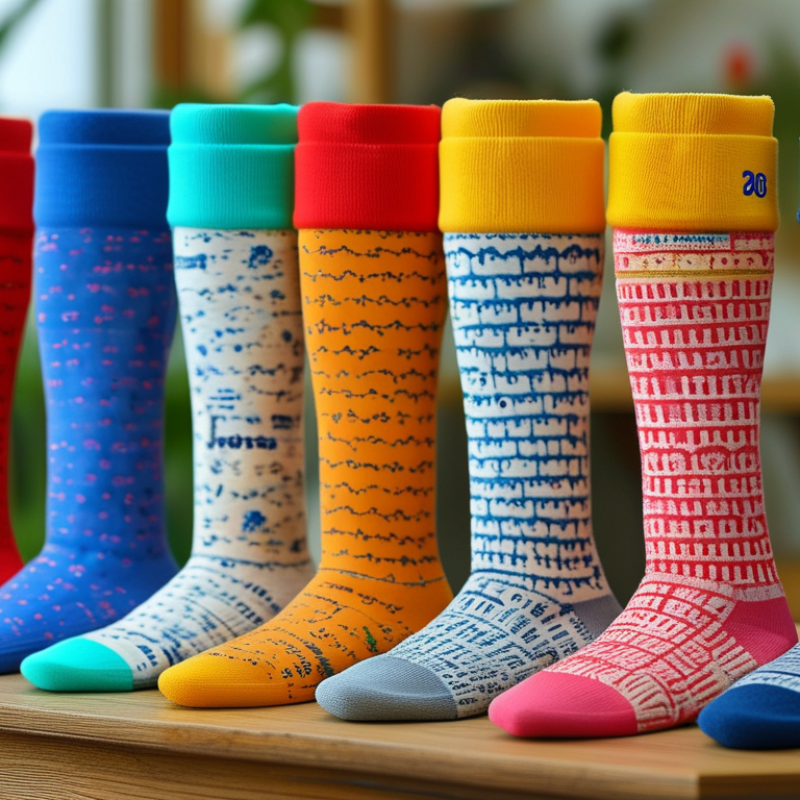
360 sock printing places artwork around the full knitted tube, including areas often missed by flat printing. The design must follow the sock’s stretch, heel shape, and toe construction. A supplier should understand yarn behavior, machine gauge, print alignment, and color control. Cotton blends, polyester, and recycled fibers can produce different results. Ask for the exact material specification before approving production.
In my production reviews, a physical sample reveals more than a digital mockup. Check the ankle, heel, and toe closely. Look for broken lines, uneven color, and blurred small text.
A reliable supplier should provide a pre-production sample, wash-test results, and clear measurements. Their quality process should explain inspection points, acceptable defects, and replacement terms. Request evidence, not broad promises.
File preparation also matters. Suppliers may require separated artwork, color references, and safe areas for stretching. Confirm whether they print after knitting or use a specialized knitted production process. These methods affect texture and durability.
A perfect screen proof can still fail on fabric. I learned that the hard way. Small details were readable on paper but disappeared near the heel.
It was not a major failure, but it changed our approval checklist. Delivery capacity, communication speed, and documented quality records should guide the final decision.
Evaluating Supplier Technology, Materials, and Production Quality
Choosing a 360 sock printing supplier in 2026 requires more than viewing bright sample photos. Technology must match the sock’s construction, stretch, and order volume. Ask whether the supplier uses digital sublimation, rotary transfer, or integrated knitting and printing. Request a live production video, not only a polished showroom sample. Check print resolution, color libraries, artwork distortion control, and repeatability across the tube. Inconsistent placement becomes obvious around the heel and ankle.
Textile Exchange’s Materials Market Report 2024 records 124 million tonnes of global fiber production in 2023; polyester held 59%. That figure makes fiber traceability a practical screening issue, not a decorative claim. Require exact fiber percentages, yarn specifications, elastane recovery data, and evidence for recycled content. A supplier should provide batch records and independent laboratory reports. Do not accept “premium cotton” without a measurable composition. It sounds reassuring, but proves little.
Production quality needs measurable gates. Request pre-production samples, shade tolerances, wash testing, dimensional change, rubbing fastness, and seam-strength results. ISO 105-C06 supports laundering colorfastness evaluation, while AATCC 61 provides accelerated laundering procedures. Compare results against your own washing cycle. A lab test can pass while household washing still disappoints. Inspect ten pairs from different production points, checking toe alignment, elastic recovery, and image continuity. Keep a signed golden sample and defect threshold. One weakness remains: suppliers often report averages, hiding variation between batches. Ask for raw data.
Comparing Pricing, Minimum Orders, Lead Times, and Shipping
How to Choose 360 Sock Printing Suppliers in 2026?
Pricing for 360 sock printing depends on yarn quality, color count, artwork setup, and packaging. Request an itemized quotation, not only a unit price. Compare the same specifications across suppliers. A cheaper quote may exclude sampling, labels, or inspection. That creates costly surprises later. Ask for price breaks at different quantities. Also confirm whether artwork changes trigger new setup fees.
Minimum order quantities can shape your entire launch plan. A supplier may accept a small sample run but require a larger production order. Ask about mixed sizes, colors, and designs within one order. This detail matters for seasonal collections. Request a physical sample before approving bulk production. Check the stretch, print alignment, toe stitching, and color after washing. One overlooked detail can weaken an otherwise strong product.
Lead times should separate sampling, approval, production, and dispatch. Get each stage in writing, with calendar days and delay procedures. Shipping quotes must state the destination, transport method, insurance, and customs responsibility. Air freight is faster, but it can damage your margin. Ocean freight costs less for volume, yet schedules may shift. Ask for recent delivery records or customer references. A supplier who answers quickly is useful, but documented performance is more reliable. I would still leave extra time for corrections, because real production rarely follows the first schedule perfectly.
Verifying Supplier Reliability, Compliance, and Long-Term Support
Choosing a 360 sock printing supplier in 2026 requires more than comparing unit prices. Reliability appears in daily details: stable production schedules, documented quality checks, and clear responses when artwork or yarn specifications change. McKinsey reported that 93% of supply chain leaders planned to increase resilience after recent disruptions. Ask suppliers for capacity evidence, backup production plans, and recent on-time delivery records. A polished factory tour is not enough. Request sample approval records and inspect print alignment, stretch recovery, colour consistency, and wash durability.
Compliance must be verifiable, not promised. Check current certifications, worker-safety procedures, chemical management records, and product-testing results. The International Labour Organization continues to identify occupational safety as a critical supply-chain responsibility. Require batch traceability from yarn intake to final packing. Independent testing can confirm restricted-substance compliance and colourfastness. Reports should show test dates, methods, and sample numbers. One weakness remains: small suppliers may hold valid certificates but lack strong digital records. That gap deserves careful discussion.
Tips: Interview the production manager, not only sales staff. Place a small pilot order before scaling. Use written service-level agreements covering defects, reprints, delivery delays, and data protection. Review support response times during sampling. Long-term support matters when seasonal demand changes or a design needs correction quickly. I would also keep a backup supplier, even after a successful first year. Trust is valuable, but dependence can become expensive.

